

The 2035 strategy is here
The morning centred on the formal presentation of Sweden’s National Semiconductor Strategy 2035 – the result of six months of roundtables, interviews and workshops across the ecosystem. The strategy focuses on high-value niches where Sweden can lead: chip and system architectures, power electronics, photonics, and analog/RF systems, backed by shared national capabilities in design, packaging, test and talent. The proposed vehicle for execution is PAE, the Program for Advanced Electronics, modelled on the successful Program for Advanced Digitalization.
“Without semiconductors, the invisible gold — resilience and security are impossible.”
Björn Samel, Vice President, RISE Smart Hardware, opening the day
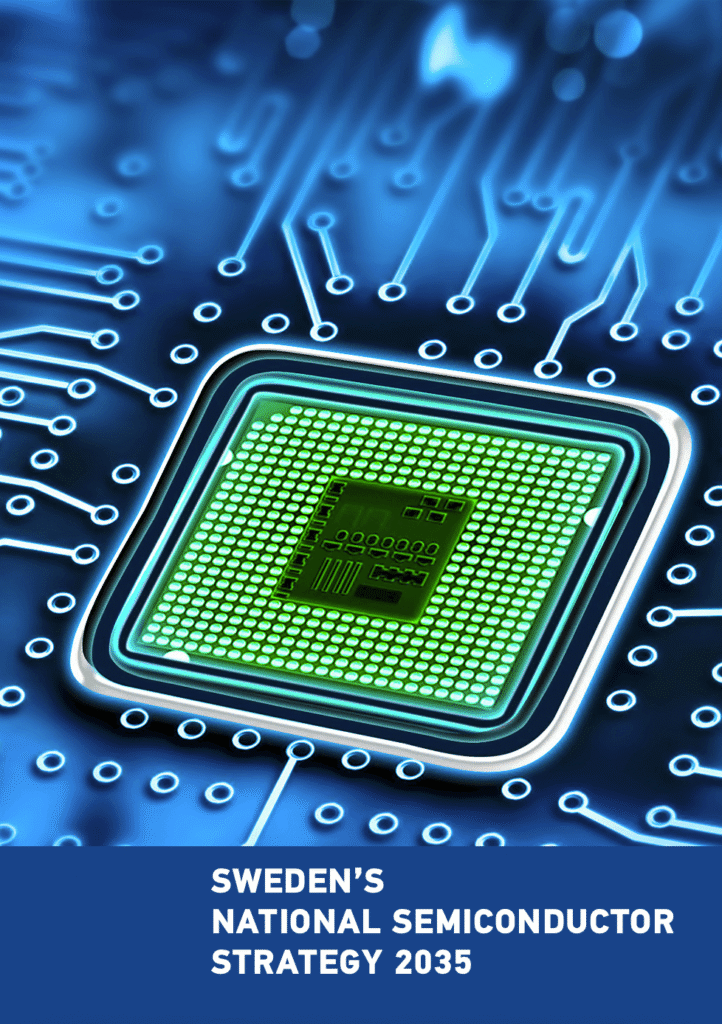
Report: Sweden’s National Semiconductor Strategy 2035
English · 63 pages
Data, analysis, action programme, SWOT and international comparison
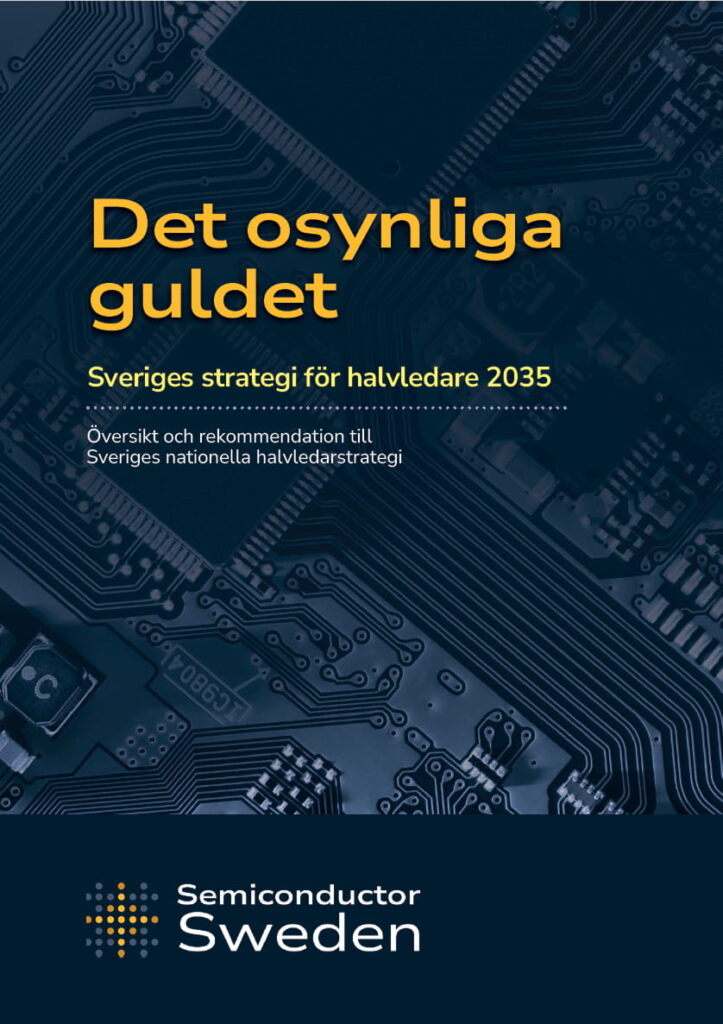
Sveriges strategi för halvledare 2025 (Sweden’s strategy for semiconductors 2035)
Swedish · 16 pages
Recommendations and strategic focus for policymakers and industry
“This is not going to come for free. Most industrial countries invest public and private money. But the willingness is there – the sense of urgency has never been stronger.”
Adam Edström, Director Fiber Optics, Photonics & Twin Transition, RISE
Thank you to all attendees and speakers
The day brought together perspectives from across the full value chain — government, defence, research infrastructure, international clusters, investors and startups. Moderated by Malin Berglund of Svensk Elektronik & Semiconductor Sweden, with panel moderation by Professor Mikael Östling of KTH. See the full agenda →
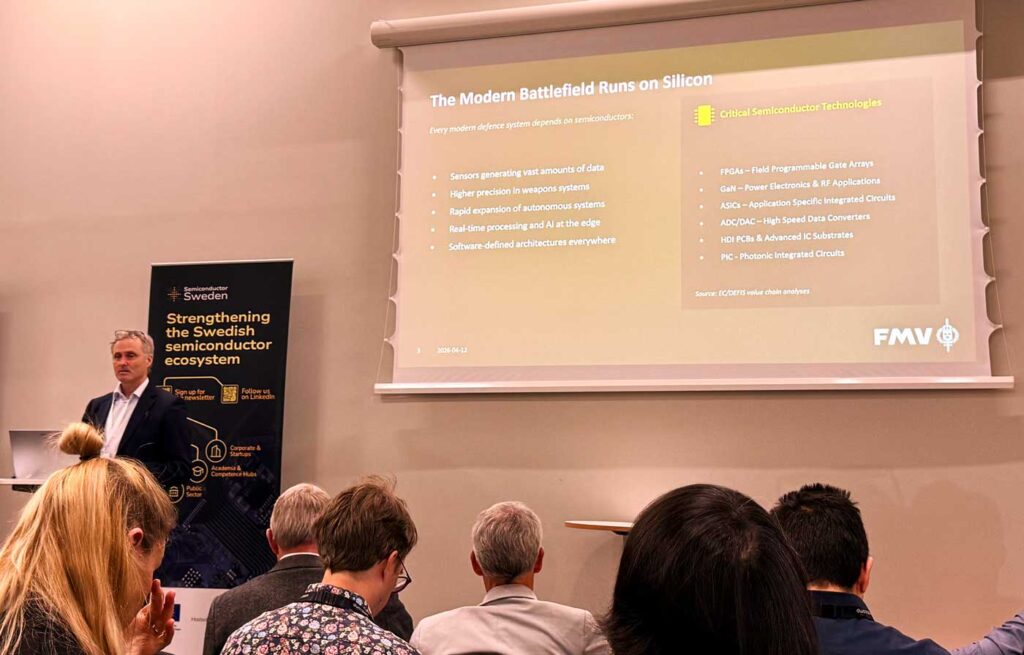
Some highlights from across the programme:
- Susanna Jansson (Ministry of Climate and Enterprise) outlined Sweden’s evolving semiconductor policy and how the new strategy will feed directly into Sweden’s position on EU Chips Act 2.0.
- Björn Langbeck (Tillväxtverket) reviewed the outcomes of the first Chips Act and what to expect from the revision, including Sweden’s active role in the negotiations.
- Jessica Svennebring (Vinnova) highlighted clusters of excellence, Sweden–South Korea as a priority partnership, and Vinnova’s SEK 3.6 billion investment portfolio last year.
- Silicon Alps brought an Austrian delegation to compare ecosystems, explore collaboration, and share hard-won experience in cluster coordination, talent equality and sovereignty, with frank discussion on what Sweden can learn and offer in return.
- Christer Karlsson (IMA), Linda Robinson (Norrköping Science Park) and Björn Magnusson (STMicroelectronics Silicon Carbide) mapped a Swedish value chain that is stronger than many realise, and highlighted where the missing links are.
- Maria Huffman (SCCC) presented the Swedish Chips Competence Centre’s role as the national gateway to European design platforms, pilot lines and MPW services.
- Thomas Swahn (Myfab) gave a tour of Sweden’s shared research infrastructure for micro- and nanofabrication, noting that 20–30 startups have emerged from Myfab users over five years.
- Olof Kindgren (Qamcom / FOSSi Foundation) challenged the room on open-source silicon: not a cost-saving measure, but an enabler of new business models and a way to accelerate the entire ecosystem.
- Henry Hodzic (Business Sweden) introduced the Nordic Chip Collaboration, making it easier to navigate shared Nordic strengths and position the region as a hub for innovation.
- Anders Ösund (Turbine Capital) named the deep-tech venture capital gap honestly, and pointed to IVA data showing Sweden’s scientific leadership is not yet converting into the patents, scale-ups and investment it should.
- Joachim Rodrigues (Fraunhofer IIS / FAU Erlangen-Nürnberg) and Francis Balestra (CNRS / SINANO) shared European perspectives on AI chip design, ICOS outcomes and strategic alliances, moderated by Mikael Östling.
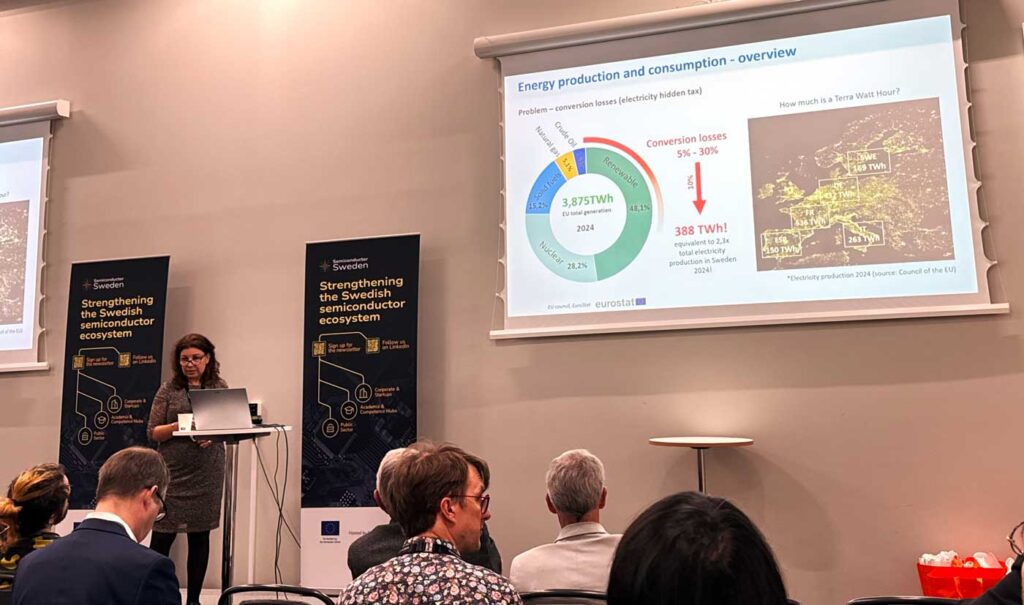
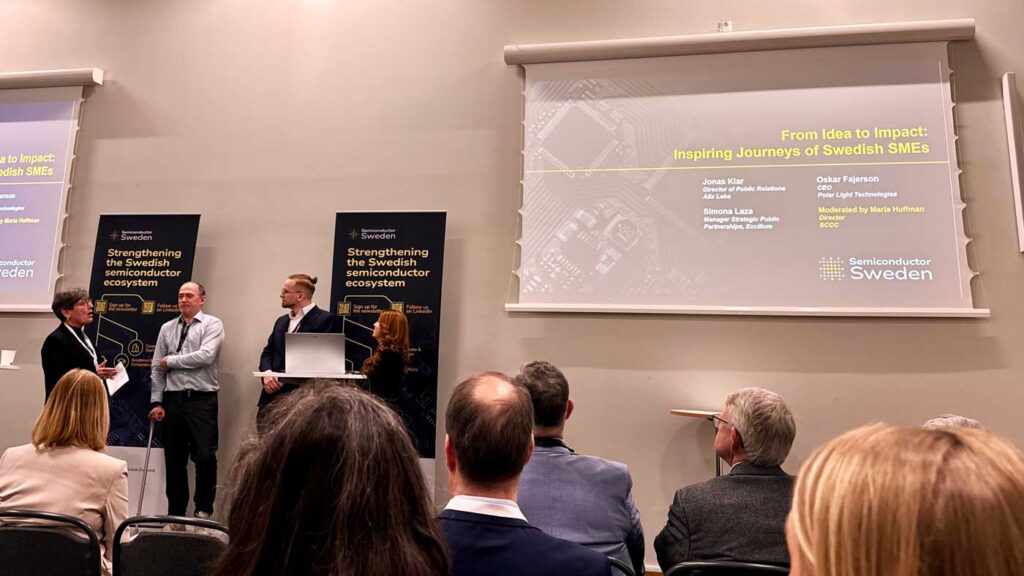
From idea to impact: Jonas Klar (AlixLabs), Simona Laza (Excillum) and Oskar Fajerson (Polar Light Technologies) on stage, moderated by Maria Huffman (SCCC) – sharing the realities of building Swedish deep-tech companies and the importance of collaborating across the full value chain, not just with direct partners.
Looking forward to Semiconductor 2027 already. The ecosystem has gathered – now it needs to move. See you next year!
Organised by Semiconductor Sweden
Co-located with Elektronikmässan
15 April 2026, Gothenburg